

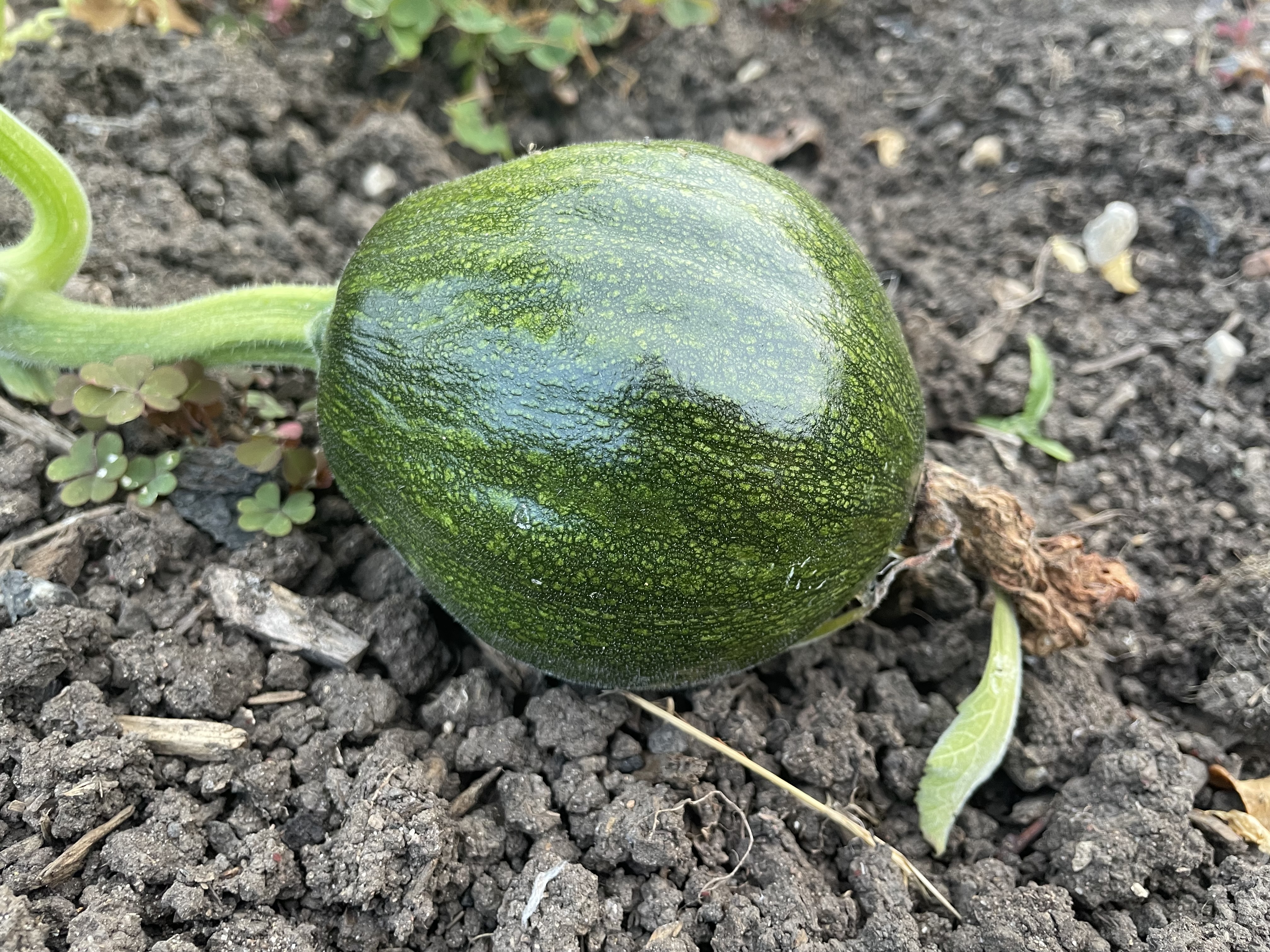
The allotment has got a little out of hand. We were gifted a lot of the things that have grown at 14b, The Paddocks. The pumpkin which is wending its way around one of the beds was given to us by a friendly allotment neighbour. The runner beans, which are going nuts here were given to us by Sam’s Dad, who grew them in his garden at home. We have inherited some strawberry plants which came over from another neighbour, the plants having independently decided to make the move over to one of our beds. We don’t entirely know what we are doing, but we are apparently growing a lot regardless.
One of our friendly neighbours told me that if you are growing plants with water, you are just having a nice day in the garden. Apparently, allotmenteering is all about using the correct combination of macronutrients: nitrogen, phosphorus and potassium. A realisation that led me to investigate some of these chemicals a little bit more. I wasn’t clear on what they all do, this is what I discovered first of all, about nitrogen, with thanks to Epic Gardening for the info:
Nitrogen (N)
Nitrogen promotes leaf growth and green colour. Without enough nitrogen, plants can’t form the proteins they need to grow. Nitrogen is an essential component of amino acids—which combine to form proteins—and nucleic acids, which form DNA. Some proteins are structural, others act as triggers which speed up important plant processes like photosynthesis, and use of carbohydrates. Carbohydrates are needed for growth, flowering, and disease resistance.
Carbohydrates are built during photosynthesis, and nitrogen is a critical component in chlorophyll, which is the molecule that drives photosynthesis.
However, plants can suffer from too much nitrogen. So our job as gardeners is to apply just the right amount.
Plants take up their nitrogen in the form of nitrate (NO₃) and ammonium (NH₄). Nitrogen in the air and complex organic compounds like those found in compost are not available to plants, until broken down by bacteria in the soil for plants. That’s why a healthy soil biome is so important.
Some plants can ‘fix’ nitrogen in the soil, using rhizobacteria that form a symbiotic relationship with them. Rhizobacteria live in the roots of legumes like beans, and they exchange the carbohydrates that they get from the plants to convert atmospheric nitrogen into ammonia, which the plants can use.
Mineralisation is where bacteria convert complex nitrogen containing compounds, like those in compost and decaying plant material into smaller compounds like ammonium. This process relies on healthy soil bacteria. So we have to apply organic fertiliser (like manure) rather than synthetic fertilisers and fumigants. Because this process relies on living creatures, plants can’t access nitrogen from organic sources in winter but they can in the spring. All due to soil temperature.
Inorganic Nitrogen fertilisers are available, but their production emits a lot of carbon dioxide and uses lots of energy. So if you can apply organic fertilisers like compost or blood meal/feather meal (NPK ratio 12-0-0) in the spring when the soil is warm enough for the bacteria to get to work, this is preferable.
Too much nitrogen can promote lots of green, leafy growth but not enough of the other two nutrients to create flowers/fruits and roots. So we need to also consider Phosphorus and Potassium.
I’ll look into Phosphorus (P) and Potassium (K) another time.
What do you put on your garden? Or are you an organic gardener who doesn’t use all of this chemical nonsense? It would be interesting to hear other views!
 Rachel Wheeley MCIPR FRSA